There had been many leaks and rumors that Apple is going to ditch Intel’s chips for their own in-house made Apple Silicon for their MacBook lineup. People were very skeptical about the performance of the laptops since Apple has been using Intel for a long time and has been optimizing their MacOS for Intel’s processors ever since. Apple has been producing their in-house silicon for iPhones and iPads (latest A14 Bionic) based on ARM architecture. Apple has had huge success since Apple’s A-series chips in the smartphone segment has been class leading and outperforming the competition from the likes of Tier 1 OEMs like Qualcomm, MediaTek and Samsung.
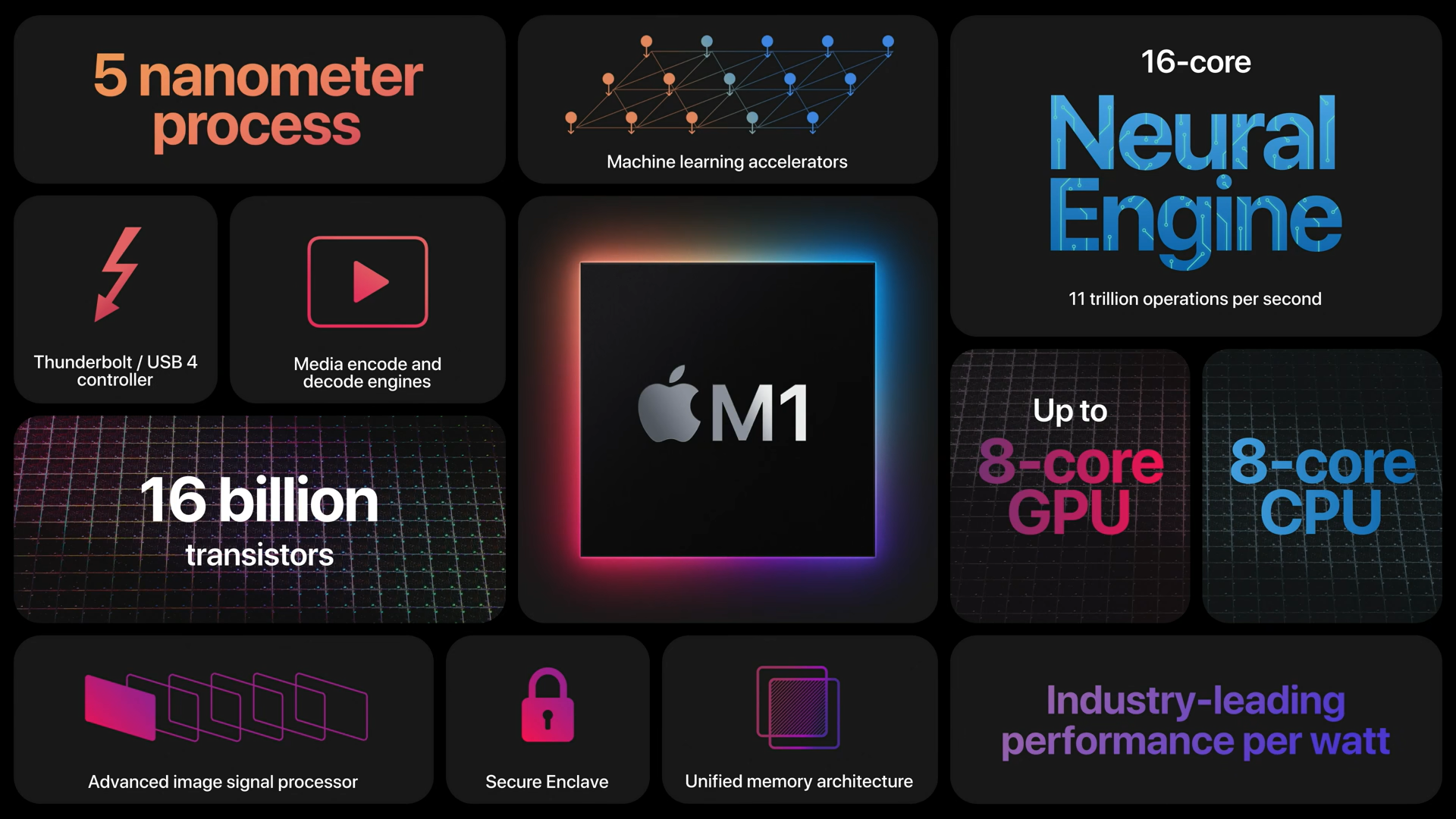
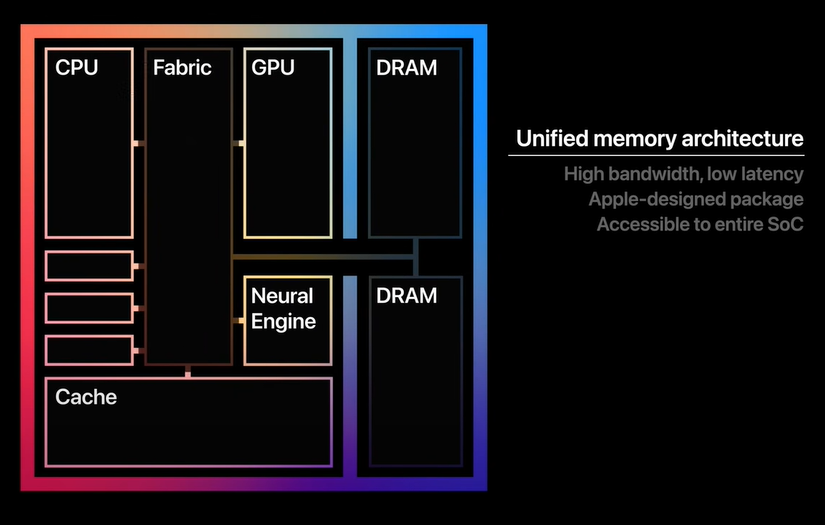
Apple finally unveiled the M1 chips on 10th November, 2020. Its fabricated on the latest 5nm process and packs 16-billion transistors in one chip. It’s based on ARM architecture similar to their A-series chips. The M1 chips have a unified memory architecture. The positive side to this move is that since the GPU and RAM is integrated in the SoC itself, its much more battery efficient, but the downside is that the user cannot upgrade the memory later down the road.
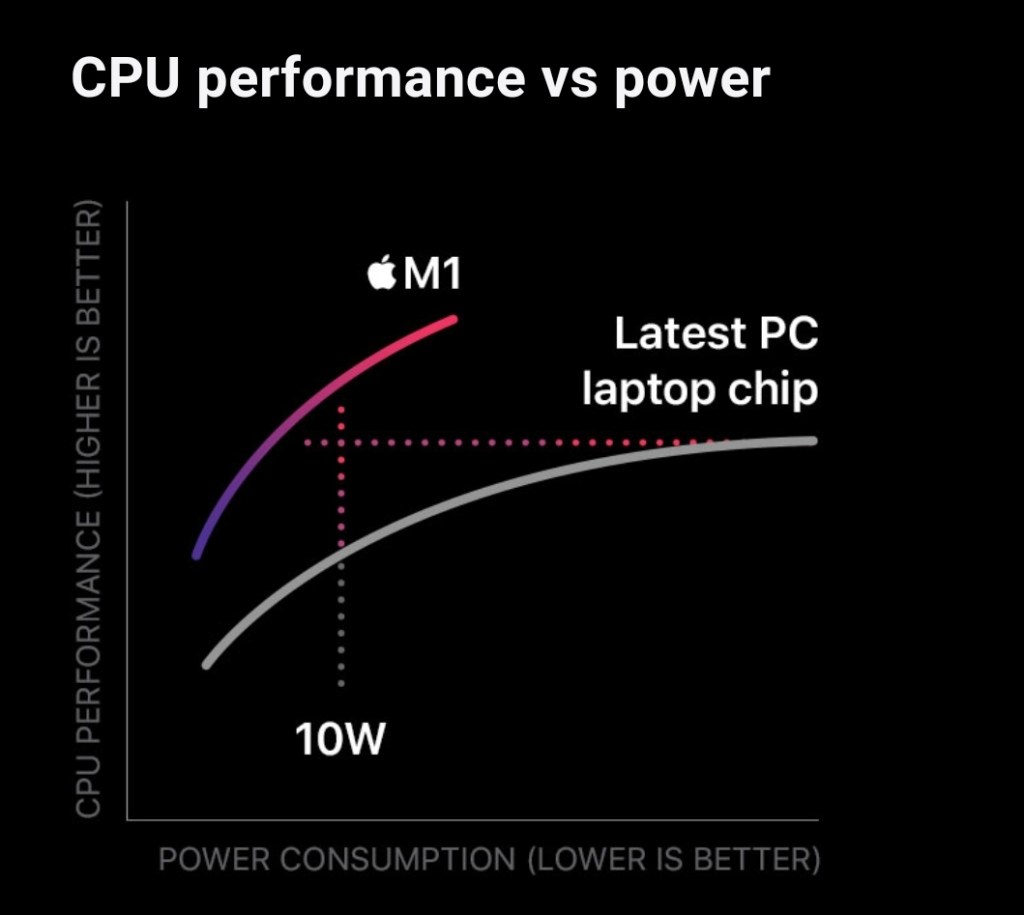
The 8-core M1 chip has 4 High Performance Cores and 4 High Efficiency Cores. Apple says M1 can deliver high performance with low power as compared to other PC chips. At just 10W M1 delivers 2x the performance of a PC chip. And M1 can match the peak performance of the PC chip while using just a quarter of the power.
M1 comes with the fastest integrated graphics ever in a SoC. Generally, PCs have to use dedicated GPU to get better graphic performance. The M1 comes with a 8 core GPU that can execute nearly 25,000 threads at a time. For machine learning algorithms, the M1 comes with a 16-core Neural Engine. It can perform 11 trillion operations in one second. Together with the CPU, GPU and Neural Engine, the M1 is fantastic for machine learning. Video editors using Final Cut Pro also benefit from the 8-core CPU and GPU.
The M1 chips together with the latest macOS Big Sur delivers amazing battery life. The processor intelligently distributes tasks to the high performance and high efficiency cores, thus optimising the tasks for a great battery life. The MacBook Pro 13″ delivers upto 17 hours of wireless web browsing and 20 hours of video playback. The cheaper Macbook Air delivers upto 15 hours of wireless web browsing and 18 hours of video playback. macOS Big Sur takes full advantage of the high level of hardware integration and offers maximum performance and efficiency at the same time. The battery stats offered by the M1 chips and unheard of and are truly amazing for a thin and light machine which is just as powerful at the same time.
macOS Big Sur is latest software iteration of macOS. It comes with blazing fast performance with the new M1 chips and promises better performance on native apps. The M1 and Big Sur offers latest security for a PC with hardware verified secure boot and advance encryption for all the files stored on the system. All the native Apple apps for M1 are already optimised and ready to use. Big Sur brings in Rosetta 2 which runs the apps that are not yet optimised for M1. All the developers will have to update their softwares so that they are fully compatible with M1 chips and can take full advantage of the hardware. Meanwhile, Rosetta 2 acts as a emulator and people can continue to use non optimised apps without any difficulties. For the first time, M1 chips can run iPad/iPhone apps thanks to the ARM architecture of the M1 which is similar to the architecture used in smartphones.
M1 truly delivers what Apple promised us and apps like Photoshop and Microsoft Office will receive updates very soon so that they are fully optimised for the M1. Apple chose a radically new approach and has succeeded in making a powerful CPU. This is still the first generation of the M1 and it looks pretty darn good for Apple. There will be a seperate post on how the M1 based MacBooks perform in day to day use, so make sure to follow my blog and stay tuned.
 The TechnoGuy