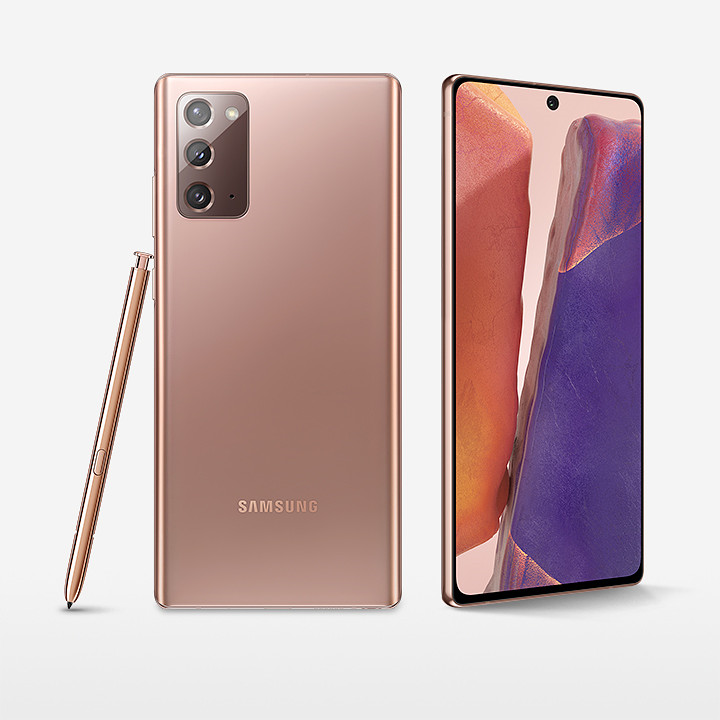
Samsung launched the Galaxy Note 20 on 5th August, 2020 at Samsung Unpacked Event 2020. The device is powered by Qualcomm Snapdragon 865+ (US) / Exynos 990 (India) processor. The Note 20 features a 6.7 inch AMOLED Full HD+ display with a resolution of 2400x1080p and has a refresh rate of only 60Hz. It comes with 8GB of RAM and 256GB ROM with a dual nano SIM card slot (4G). It comes with the latest Android 10 based on Samsung’s One UI. The Note 20 packs a 4300 mAh battery and supports 25W wired fast charging. For bio metrics, Note 20 has a in-display Ultrasonic fingerprint scanner. Coming to optics, Note 20 comes with a 10MP selfie camera and a rear triple camera setup (12MP main sensor + 12MP Ultrawide + 64MP Telephoto with 3x zoom). The primary camera is capable of shooting 8K 24 fps or 4K 60 fps video with Slow-mo video of 960fps at 720p. What makes Samsung’s Note lineup unique is the S-Pen. The Note 20 comes with a S-Pen with a touch latency of 26ms. Samsung has launched the device at USD $1000 or Rs. 77,999 in India.
At $1000, the Note 20 comes in the premium market segment in which company’s launch their flagship smartphones. Smartphone makers pack in all their high-end technology with the highest end available specifications in their flagship phones.
The minimum flagship specifications in 2020 :
- AMOLED Quad HD (1440p) screen with a high refresh rate (90Hz or 120Hz).
- Excellent camera setup.
- Excellent and sturdy build quality with glass and metal sandwich design.
- The best processor available (preferably Snapdragon 865/865+).
- Fast charging with wireless charging.
The Note 20 fails to meet the minimum flagships requirements of 2020. It comes with just Full HD screen with 60Hz refresh rate. It has a mediocre camera setup. Samsung has cut corners even in the build quality and comes with a plastic back and therefore has only wired charging (since wireless charging work only through glass). There is no way Samsung can justify the price tag of $1000 for the Note 20 with these specifications when the competitions are offering way better phones.
Let’s compare the Note 20 with another popular high-end phone, the OnePlus 8 Pro.


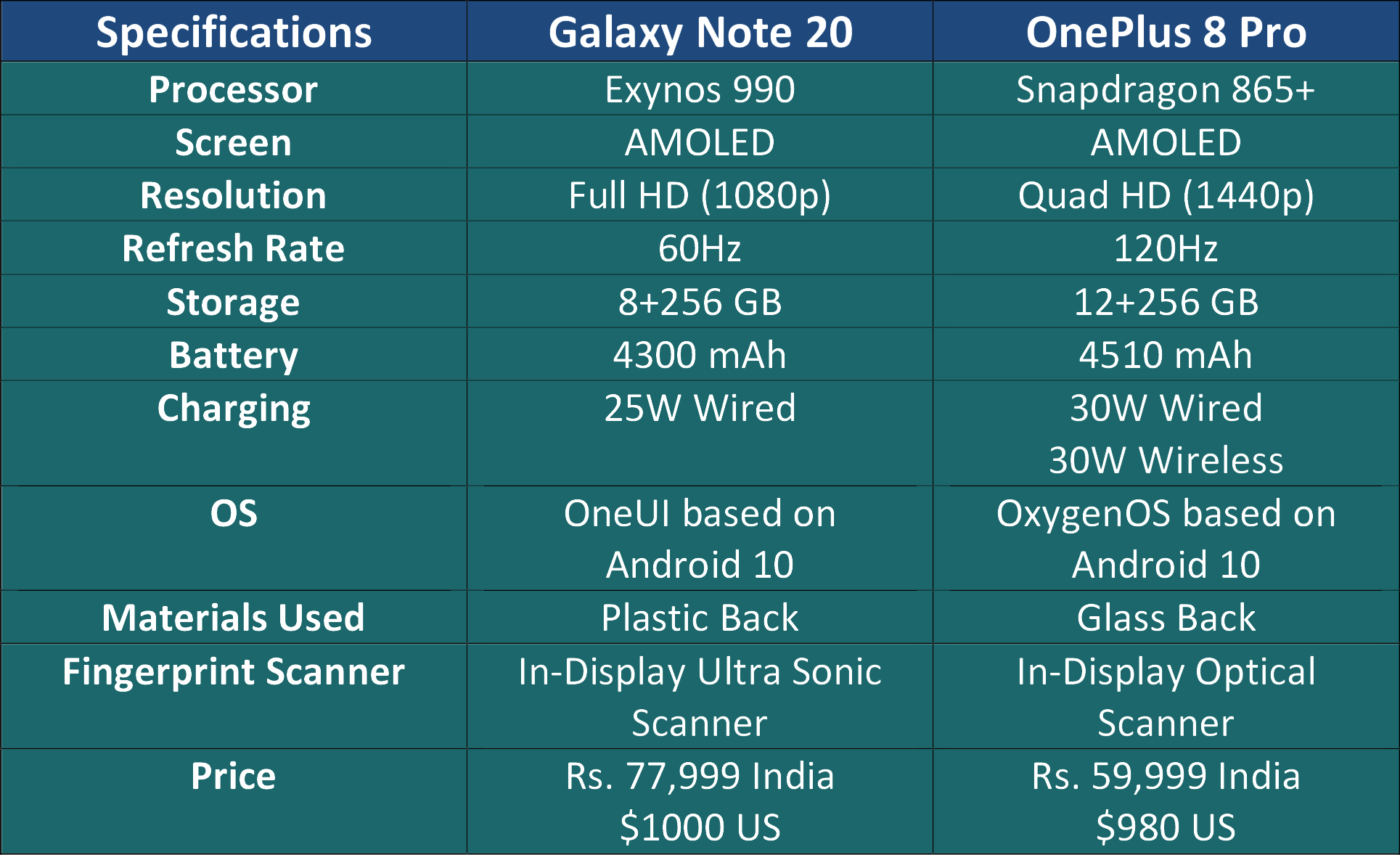
As you can see, the OnePlus 8 Pro is clearly better is every aspect, be it the materials used, the display, the storage, battery etc. The 8 Pro being better is even cheaper than Note 20 by almost Rs. 18,000. The Note 20 comes with Exynos 990 in India. The Snapdragon 865+ has a slight edge over the Exynos 990 in terms of performance. Exynos, for those of you who don’t know, is Samsung’s own processor lineup which they design and manufacture allowing them to save a few bucks and design the processor as per their needs. The weird thing is Samsung sells the Note 20 with SD865+ processor in US, while India gets the Exynos 990. There is no clear reason yet as to why Samsung does this but clearly most of the consumers want Snapdragon processors in their phones. 5G is going to be rolled out in a few years as we know. The Note 20 doesn’t even has 5G compatibility. On the other hand, the 8 Pro has 5G support which is makes it pretty future proof.
Overall, the Note 20 is absolutely not worth the launch price of $1000. Samsung phones typically get cheaper after some time, but even if it gets cheaper, there are still better phones available in the premium market. Samsung really needs to focus on what the consumers want and what phones they deliver. It is understood that Samsung is a big company and they have to maintain their profit margins, but cost cutting to such an extend in the premium segment is not acceptable.
 The TechnoGuy